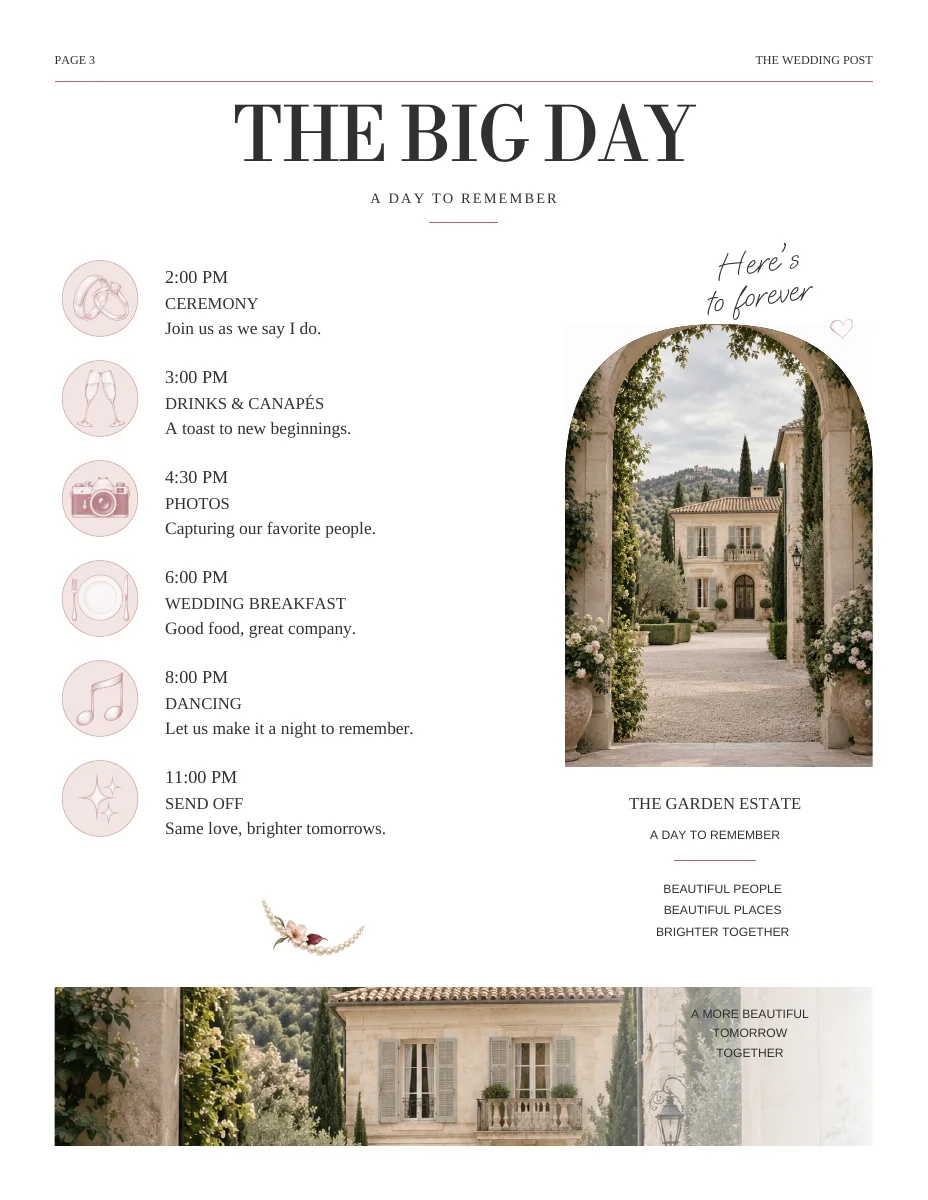
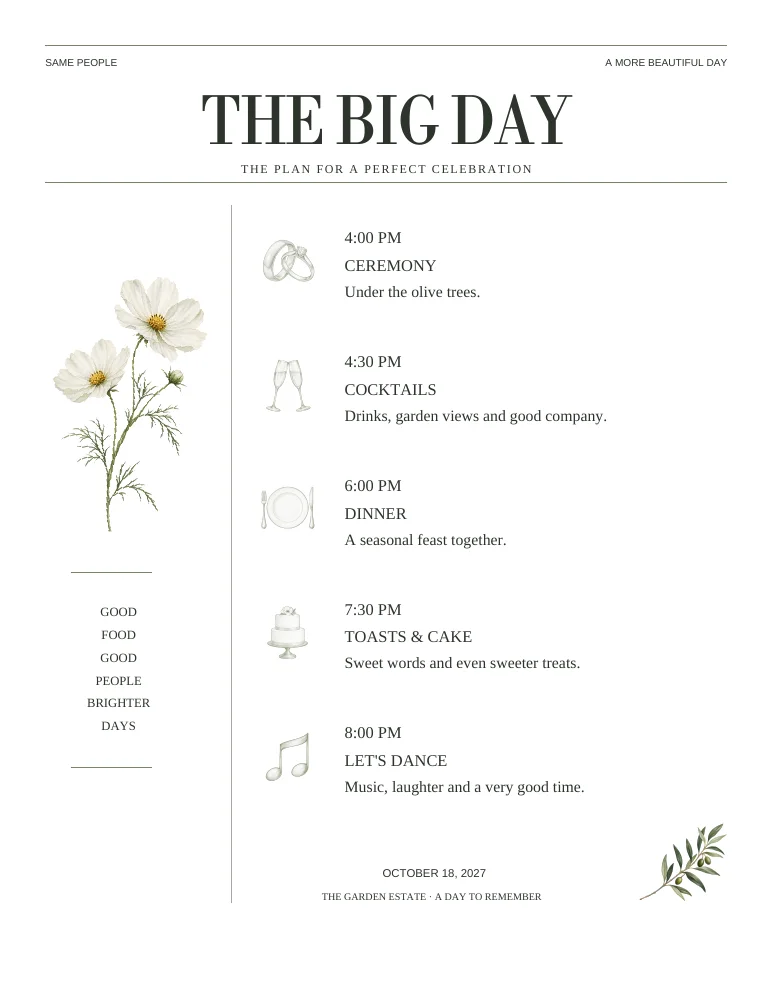
Write the arrival instruction first
If guests should arrive before the ceremony, list arrival and ceremony as separate entries. Do not quietly move the ceremony time earlier to compensate for lateness. Confirm the wording with the person coordinating the entrance and seating.
Use plain labels for important moments
The ceremony, drinks, dinner, speeches, dancing and departure are easy to recognize. A playful subtitle can follow the label, but should not make someone guess whether they are missing a meal or a shuttle.
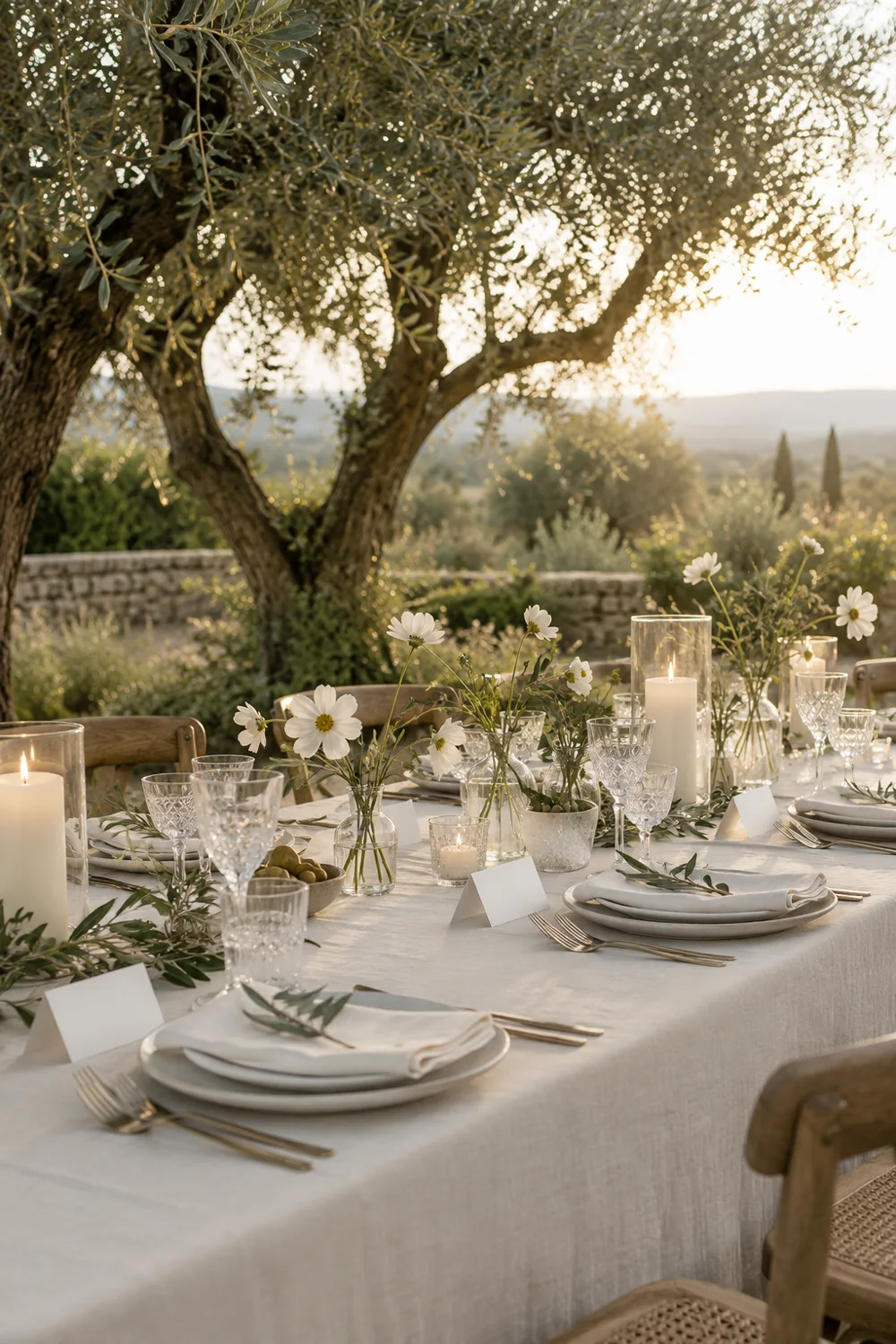
A sample guest-facing sequence
3:30 PM — Arrive and find your seat. 4:00 PM — Ceremony in the garden. 4:45 PM — Drinks on the terrace. 6:00 PM — Dinner in the hall. 8:00 PM — Dancing. 10:30 PM — First shuttle departure. These times are a writing example only; build your schedule with your actual venue and suppliers.
Explain changes of location
Add a venue name or pickup point where the guest needs to move. If dinner and dancing happen in the same room, repeated addresses add noise. For a separate reception venue, provide enough information to navigate without asking the couple.
Guest schedule, not supplier schedule
| Include | Usually omit | Reason |
|---|---|---|
| Arrival and ceremony time | Supplier load-in | Guests need their own next action |
| Reception location | Room reset instructions | Avoid internal logistics |
| Dinner and dancing | Every kitchen service cue | Keep the sequence readable |
| Last shuttle and pickup point | Driver contact sheet | Give clear departure guidance |
Proof every time together
Check the printed schedule against transport bookings and venue access times. For multi-day celebrations, include dates and specify local time where helpful. Keep the latest online schedule available if plans change after printing.
Two ways to write the same moment
Direct: 4:45 PM — Drinks and canapés on the terrace. Warm: 4:45 PM — A toast to the newlyweds. Join us for drinks and canapés on the terrace.
Both tell guests what is happening and where. Choose the longer version only if the layout has room. A schedule works best when labels are parallel: ceremony, drinks, dinner, dancing. If every event has a different sentence structure, the times become harder to scan.
Use AM and PM consistently. Include the date when the paper covers several days, and identify local time if travel could create confusion. Have someone outside the planning team read it without an explanation.
Write a useful weather or transport note
For an outdoor plan, give guests a stable place to find the latest update rather than printing a speculative forecast. For example: If the ceremony moves indoors, our welcome team will direct you from the main entrance. Use that sentence only when it reflects the venue's real plan.
Transport deserves particular care. Name the pickup point, departure time and whether a reservation is needed. A line such as shuttles provided is incomplete if guests do not know where to wait. Confirm the final printed wording with whoever manages the transport, and keep the live information reachable after the newspaper goes to print.
ON THE PAGE
See how it comes together.
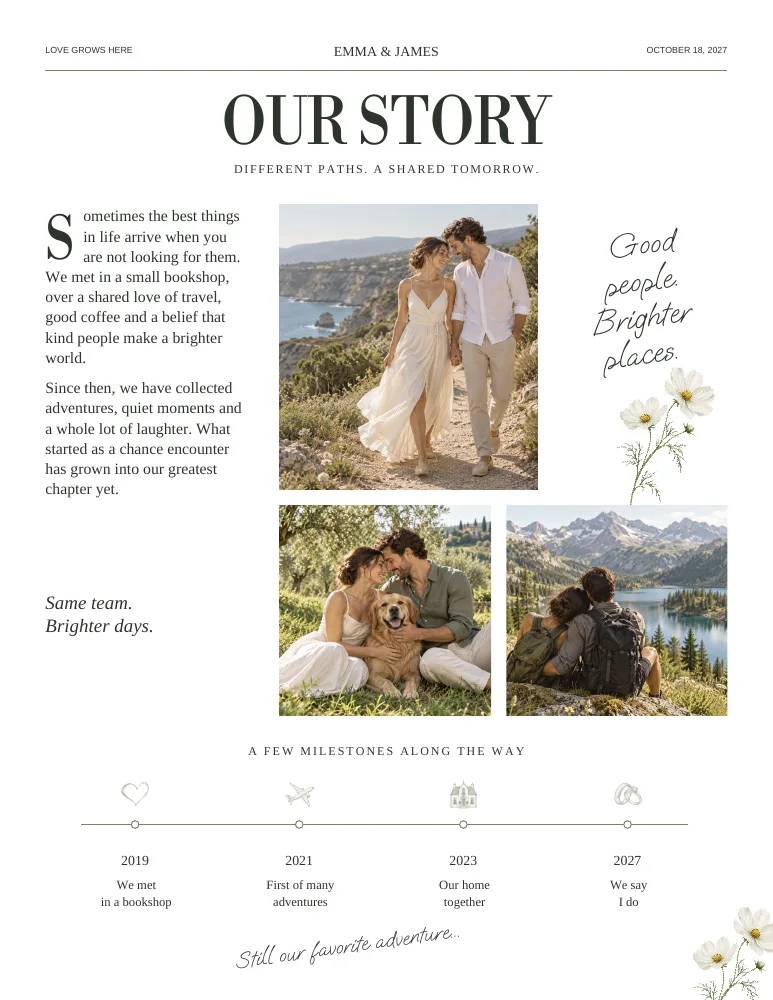
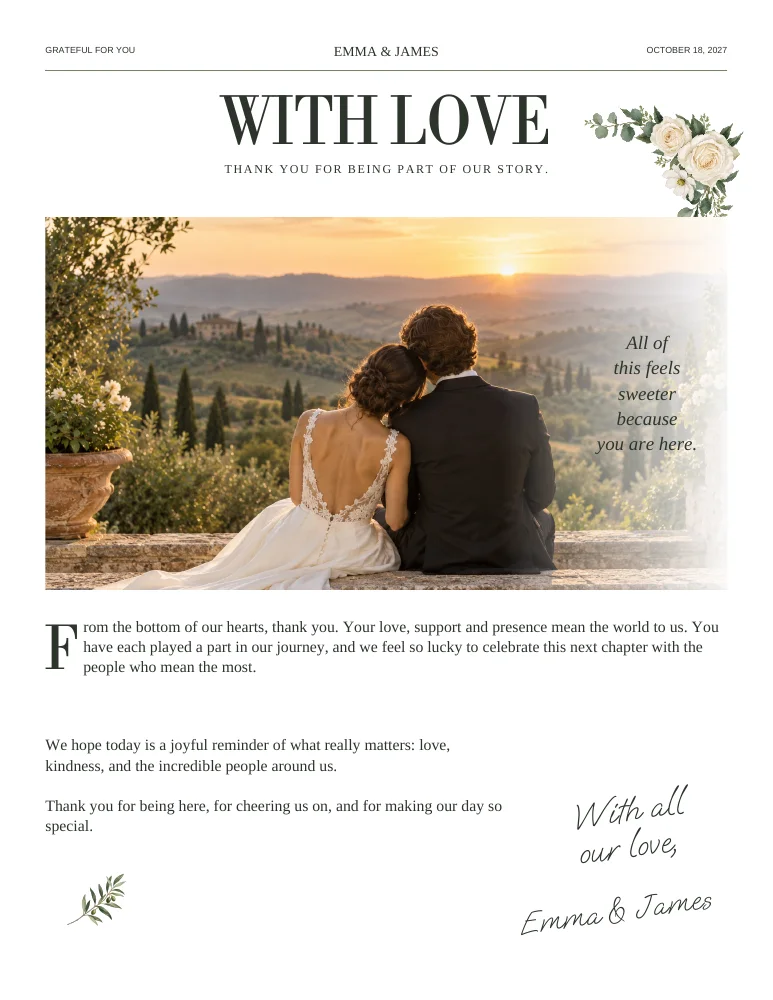
Actual sample pages from Botanical Minimal. Open a page to explore the PDF. Replace the fictional details and sample photographs with your own.
KEEP IT SIMPLE
Your next steps
- Arrival and ceremony distinguished
- Locations included at transitions
- Transport times confirmed
- One consistent time format
GOOD TO KNOW
A few things you might be wondering.
Should every activity have an exact time?
No. Fixed arrivals and transport need precision. Some reception moments may be clearer as a sequence rather than a promise to the minute.
Can I use icons?
Yes. Use them as a visual aid alongside text, not as the only explanation of an event.