
Headlines that say what the page is about
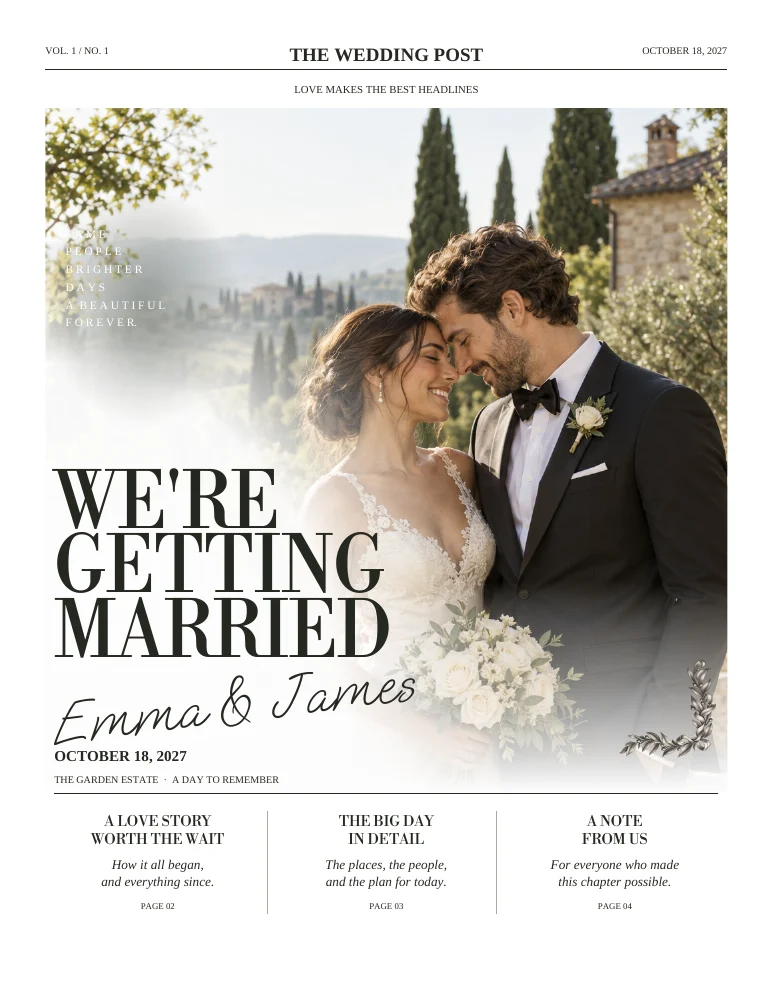
For the cover: We're getting married; A day for our favorite people; The start of our next chapter. For the story: How we found each other; Different chapters, the same us; From a first hello to forever. For the day: Here is how the day unfolds; The celebration begins. Keep the title short enough for the design.
A welcome note you can personalize
Today brings together people from every chapter of our lives. Thank you for the journeys, the help and the love that brought us here. We are so happy to share this day with you. Add one specific line about the venue, a family tradition or guests traveling from afar so the note could not belong to just anyone.
Clear wording for the schedule
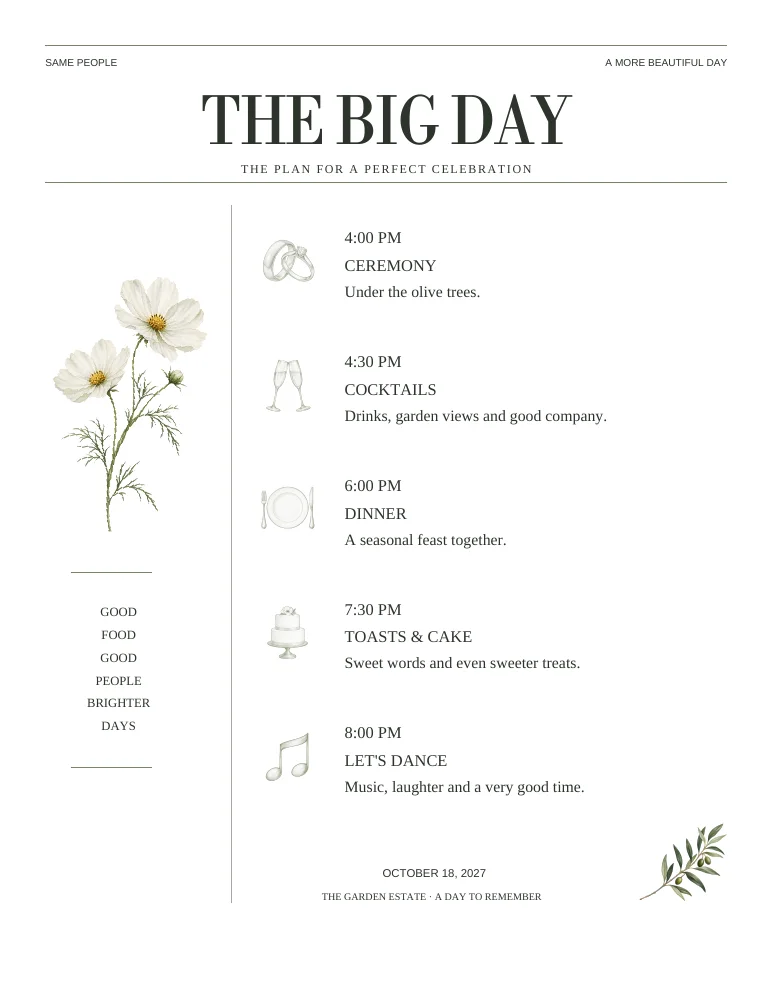
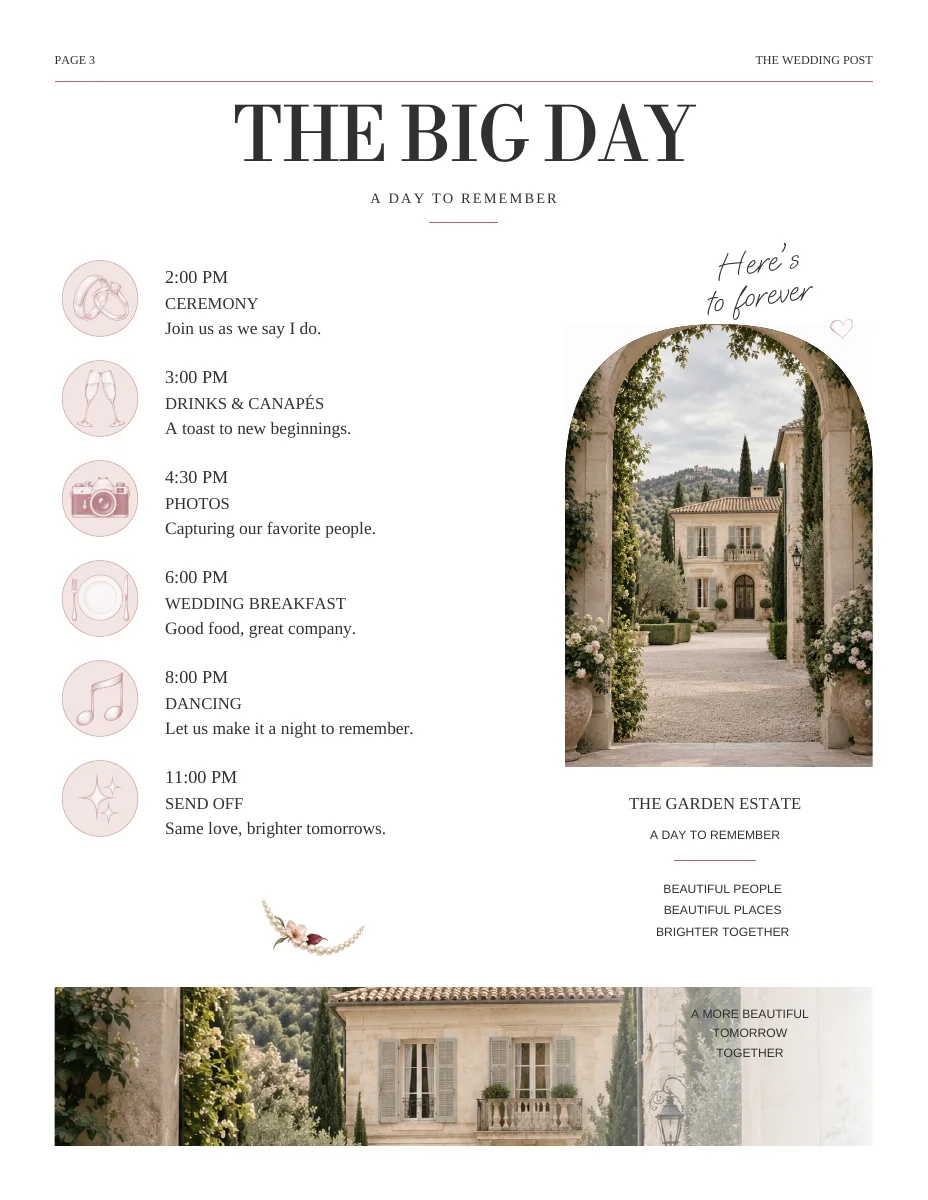
3:30 PM — Arrive and find your seat. 4:00 PM — The ceremony. 4:45 PM — Drinks and a little catching up. 6:00 PM — Dinner, stories and toasts. 8:00 PM — Meet us on the dance floor. These are illustrative times, not a suggested schedule for every wedding. Use the timings confirmed with your own venue.
A short introduction to a person
Maya — Friend, travel companion and the person who knew this was a love story before we did. She has been beside us for the big milestones and the ordinary Tuesdays. Keep introductions similar in length so the page feels balanced; check that the person is comfortable with the anecdote.
Replace vague copy with useful wording
| Instead of | Try | Why it helps |
|---|---|---|
| The best day ever | A day with our favorite people | Feels personal without overstatement |
| Be there early | Please arrive by 3:30 PM | Gives an actionable instruction |
| Party time | Dancing begins after dinner | Explains what happens next |
| Scan me | Scan to share your photographs | Names the destination |
| Thanks for everything | Thank you for traveling to celebrate with us | Acknowledges a specific kindness |
A closing thank-you
To our family and friends: thank you for showing up for us, today and in all the days that brought us here. We hope you leave with a good memory, a full heart and at least one story worth retelling. With love, [your names]. A final note can be simple without feeling impersonal.
Edit for clarity
Remove repeated phrases such as so excited from every section. Spell out dates when a numeric format could be ambiguous. Use the same names and venue wording across products. Read the smallest captions separately; they are easy to miss during a story-focused proofread.
A welcome note you can adapt
Welcome to our favorite gathering. Some of you have known us since childhood; some became family along the way. Today we get to bring those chapters together. Thank you for making the journey, sharing the stories and filling this place with people we love. We are so glad you are here.
Make the note yours by changing one broad sentence into a true detail. If most people live nearby, thank them for setting the day aside rather than making a journey. If you are celebrating over several days, welcome them to the weekend. A small accurate detail is warmer than a grand sentence that does not fit.
Keep tone consistent across practical and personal copy
Choose whether you generally say we and our, or use your names in the third person. Either can work; changing voice every paragraph is what makes a paper feel assembled. Use the same names and time style throughout.
Read the complete newspaper aloud once. Remove phrases you would never say to a friend, and shorten sentences that need a second breath. Leave poetic language for the headline or a short note. In instructions, make the action unmistakable: where to go, when to arrive or how to reply. Clear logistics are part of a considerate tone, not a break from the romance.
ON THE PAGE
See how it comes together.
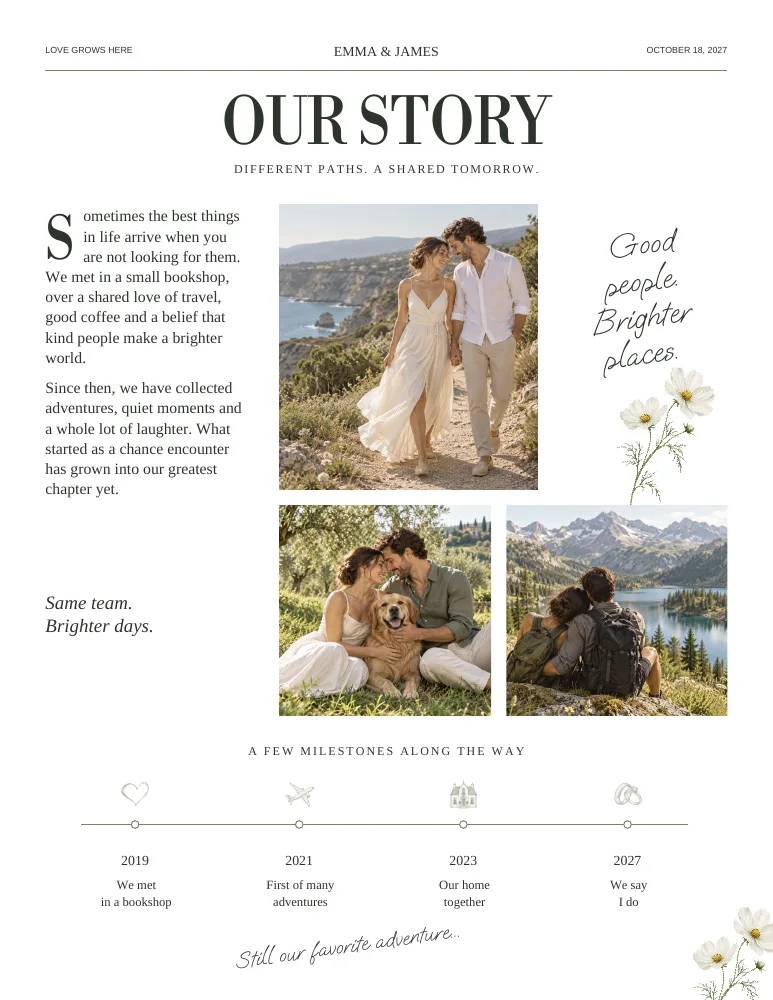
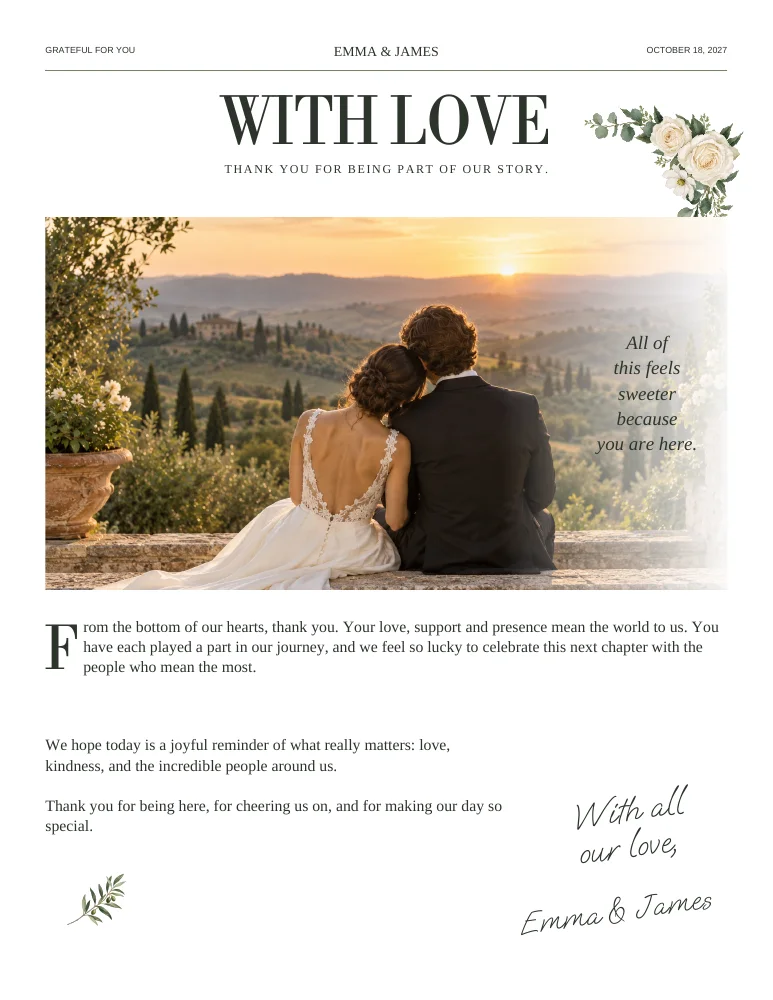
Actual sample pages from Botanical Minimal. Open a page to explore the PDF. Replace the fictional details and sample photographs with your own.
KEEP IT SIMPLE
Your next steps
- Short, useful headlines
- Specific details in personal passages
- Confirmed times in logistics
- Names and tone consistent
GOOD TO KNOW
A few things you might be wondering.
Should the wording be formal?
Match the celebration and your voice. Keep practical instructions direct even when the surrounding story is playful.
Can I copy these examples?
You can adapt these original examples for your wedding paper. Replace placeholders and add personal details before printing.