Study the hierarchy
Notice what you read first on each page: headline, photograph, short phrase or body copy. Then ask whether your own text can work at a similar length. A visual example is a guide to pacing, not a reason to copy every sample sentence.
Compare four pages with eight
The four-page format keeps the main story close to the logistics. Eight pages let the people and smaller moments become separate features. Open both PDFs and count the photographs you would need, including guest portraits if you want that section.
Choose by the inside pages
Classic emphasizes editorial typography and graphite detail. Modern uses warm red accents and expressive shapes. Botanical gives the content more botanical framing and a quiet palette. Judge the schedule and text-heavy pages as carefully as the cover.
Translate the example into your wedding
Replace the sample venue, date and anecdotes with confirmed details. Choose photographs with similar orientation and enough space for the crop. If your guest list or wording changes the output length, review the actual generated document rather than relying on this sample's page count.
How to read a design sample
| Look at | Ask yourself | Try in your version |
|---|---|---|
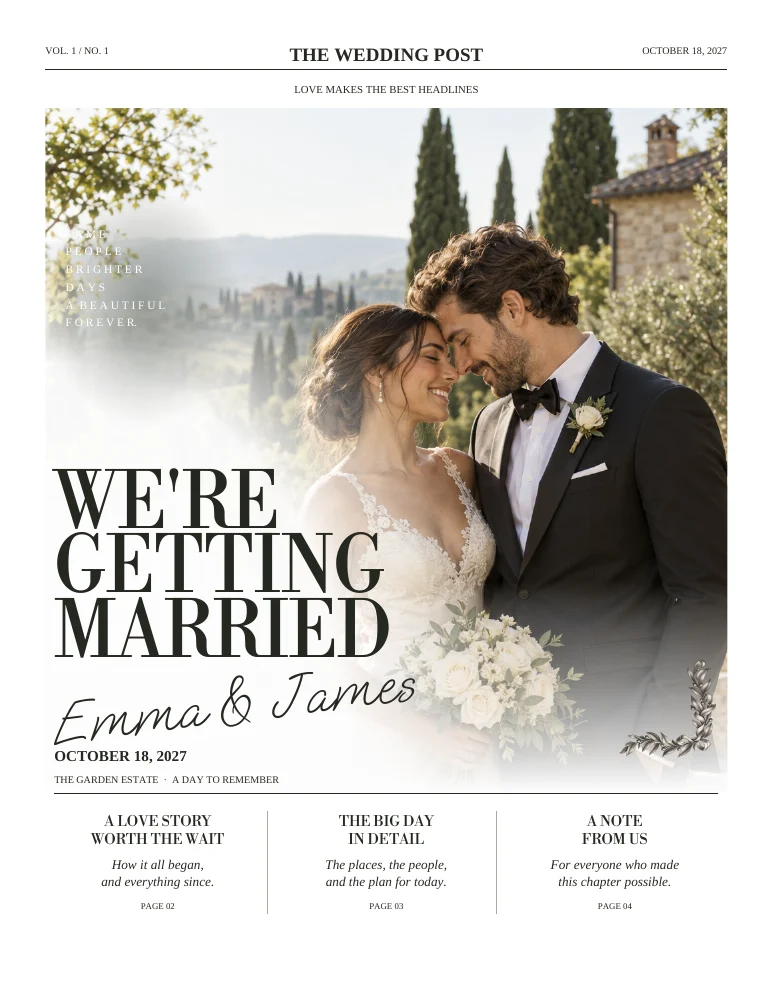
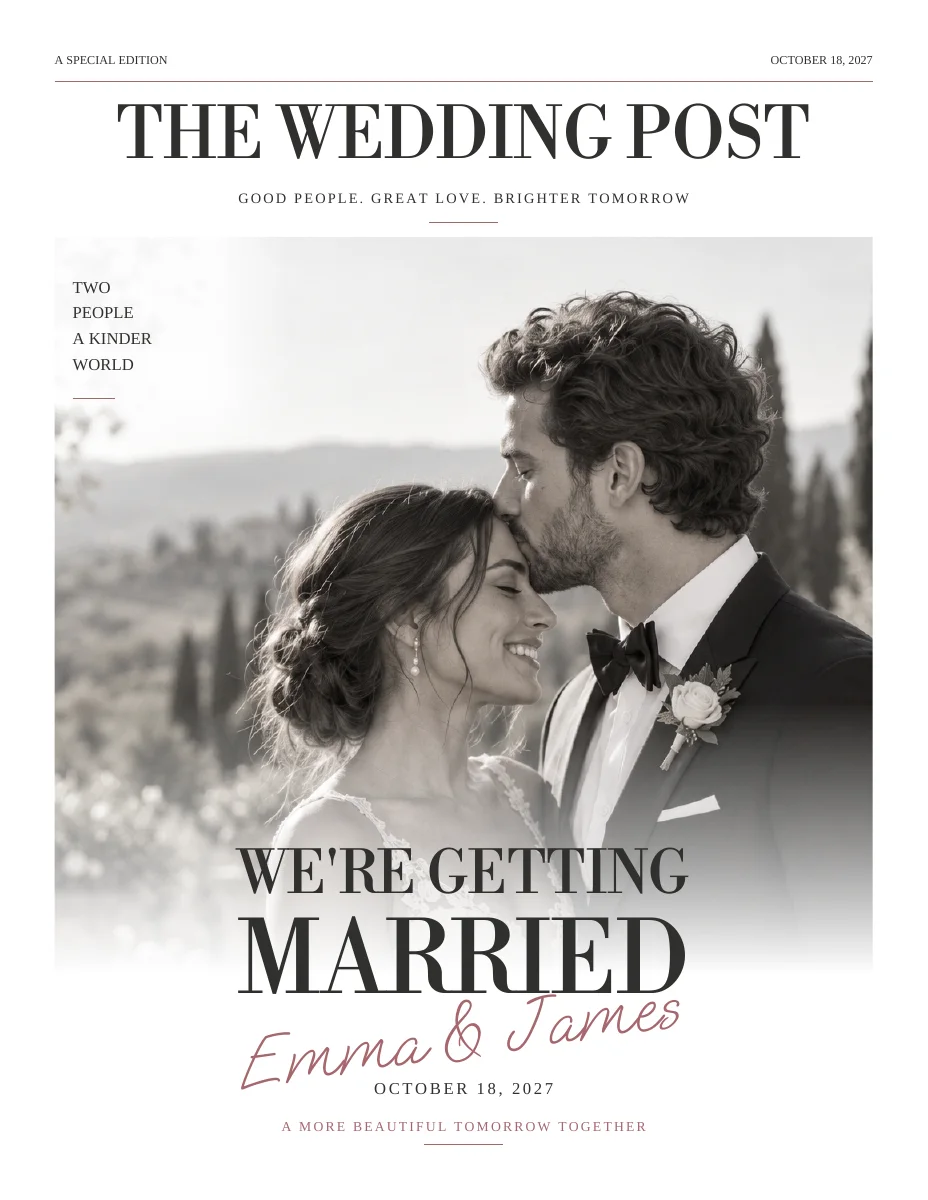
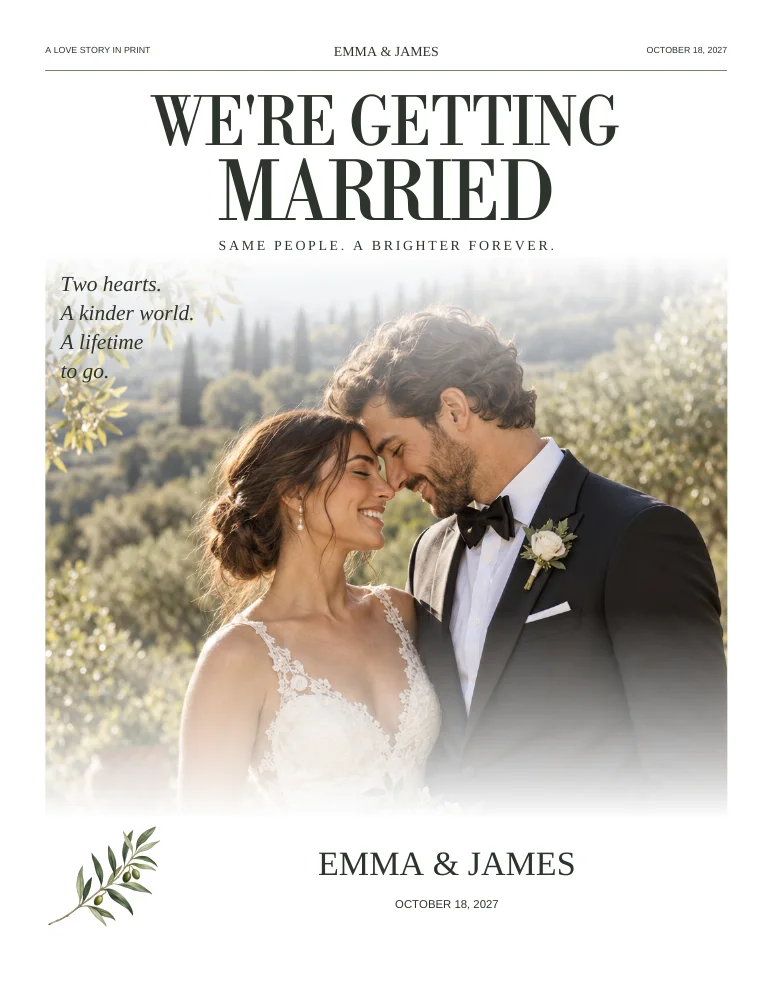
| Cover hierarchy | What do I notice first? | One strong image and a short headline |
| Story page | Can I follow the reading order? | Separate narrative, timeline and captions |
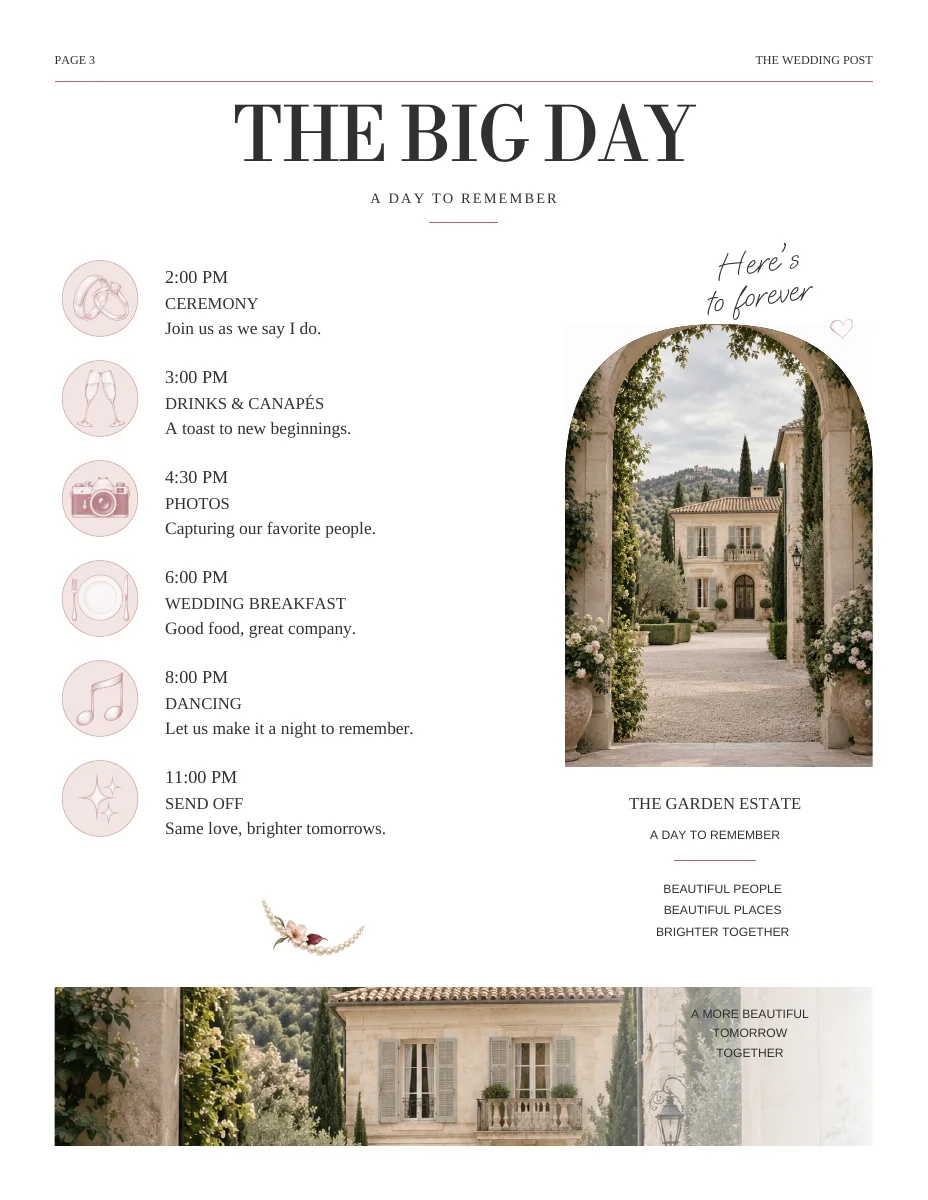
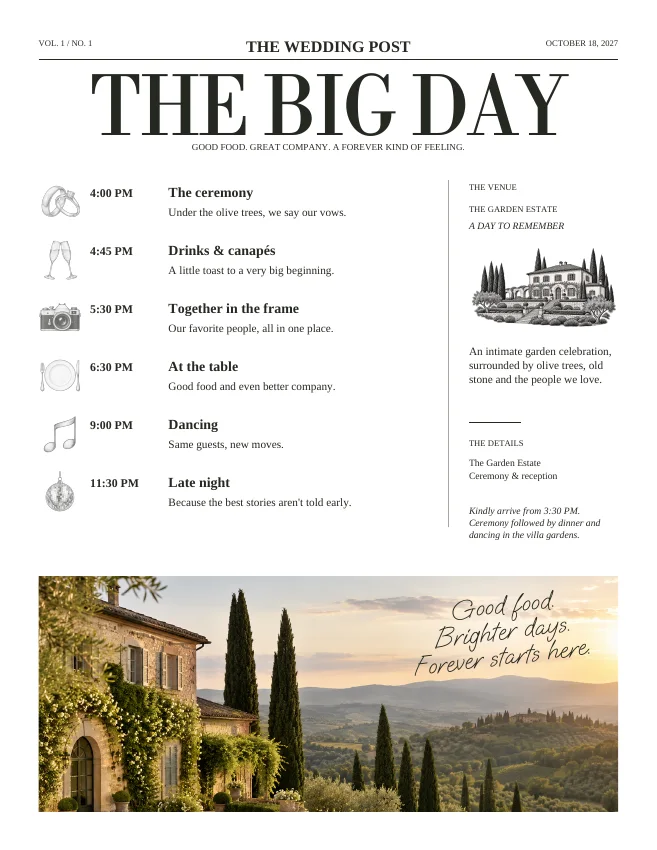
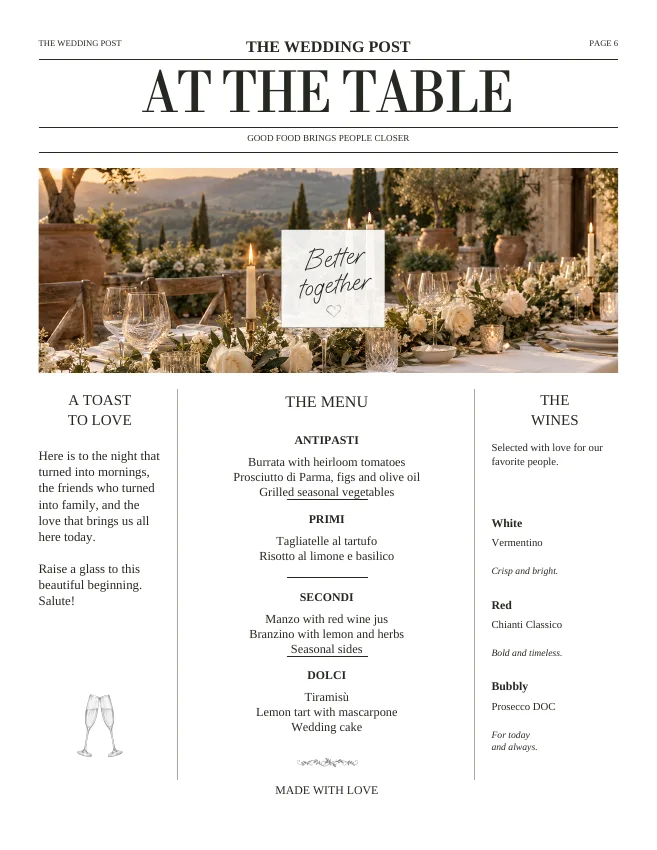
| Day plan | Are times easy to find? | Consistent time labels and clear locations |
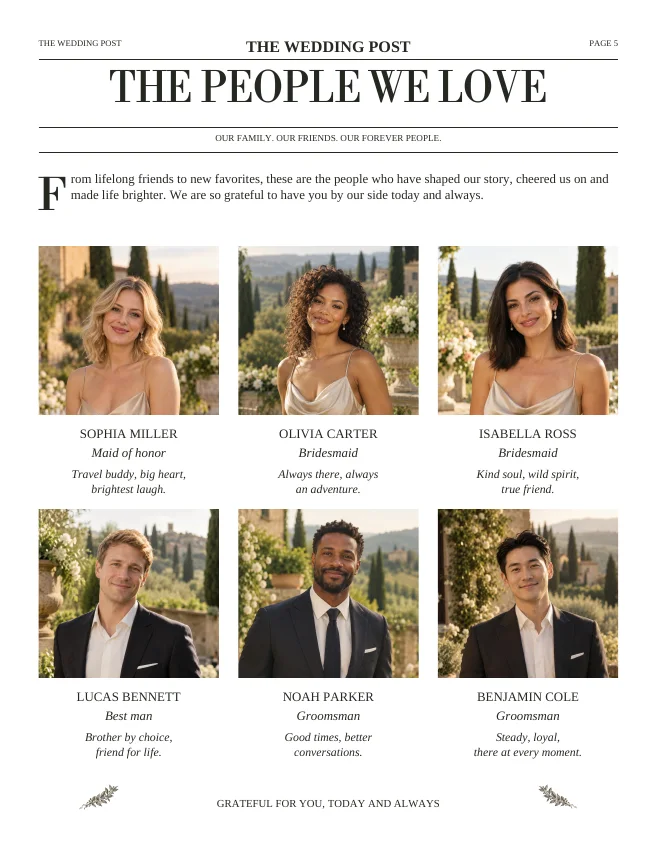
| People page | Do names match their portraits? | Similar crop and caption length |
| Closing page | Does it feel like an ending? | A single note with a memorable photograph |
The four-page example, page by page
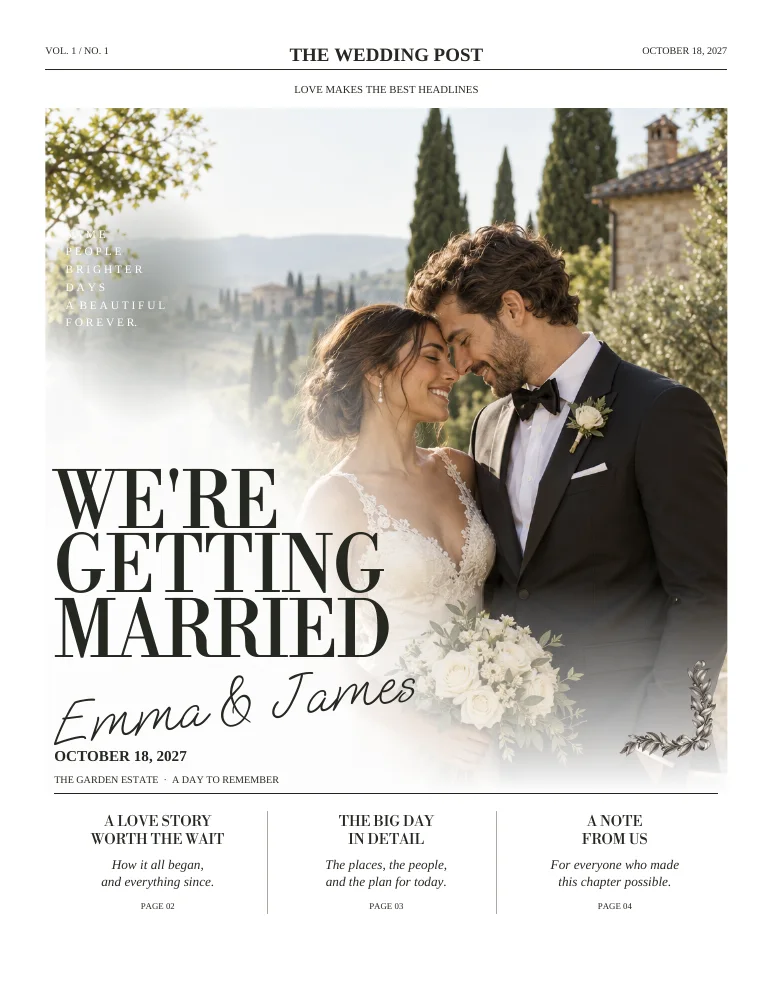
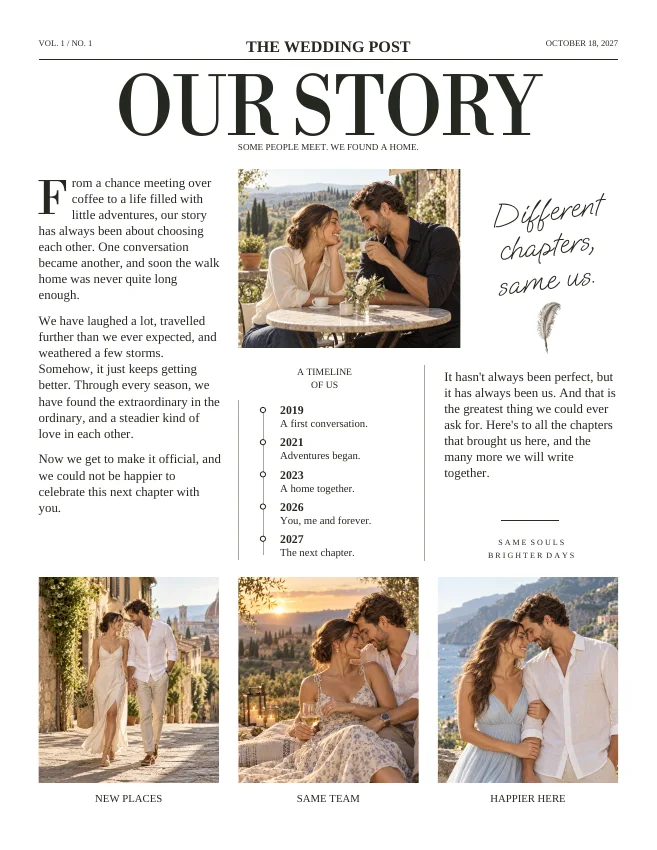
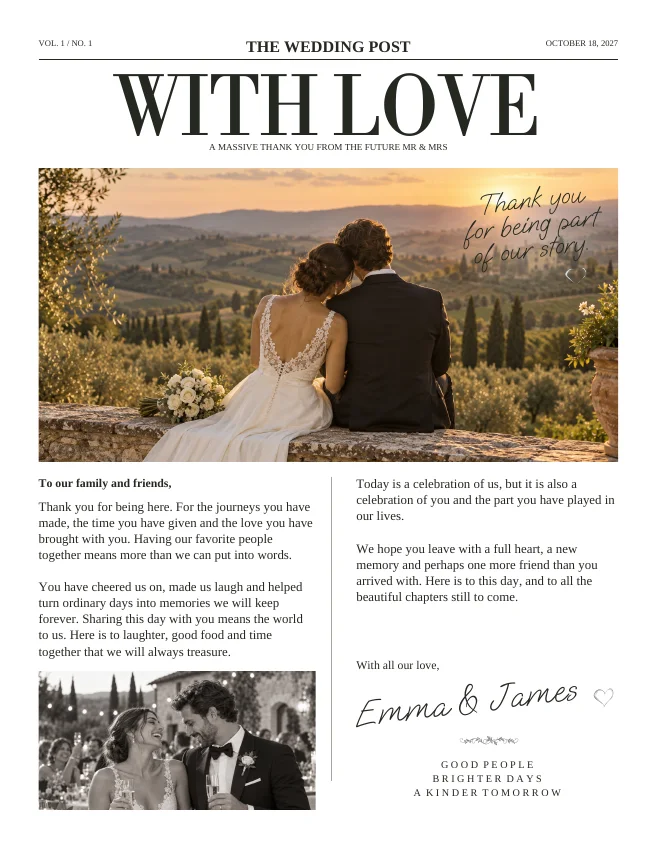
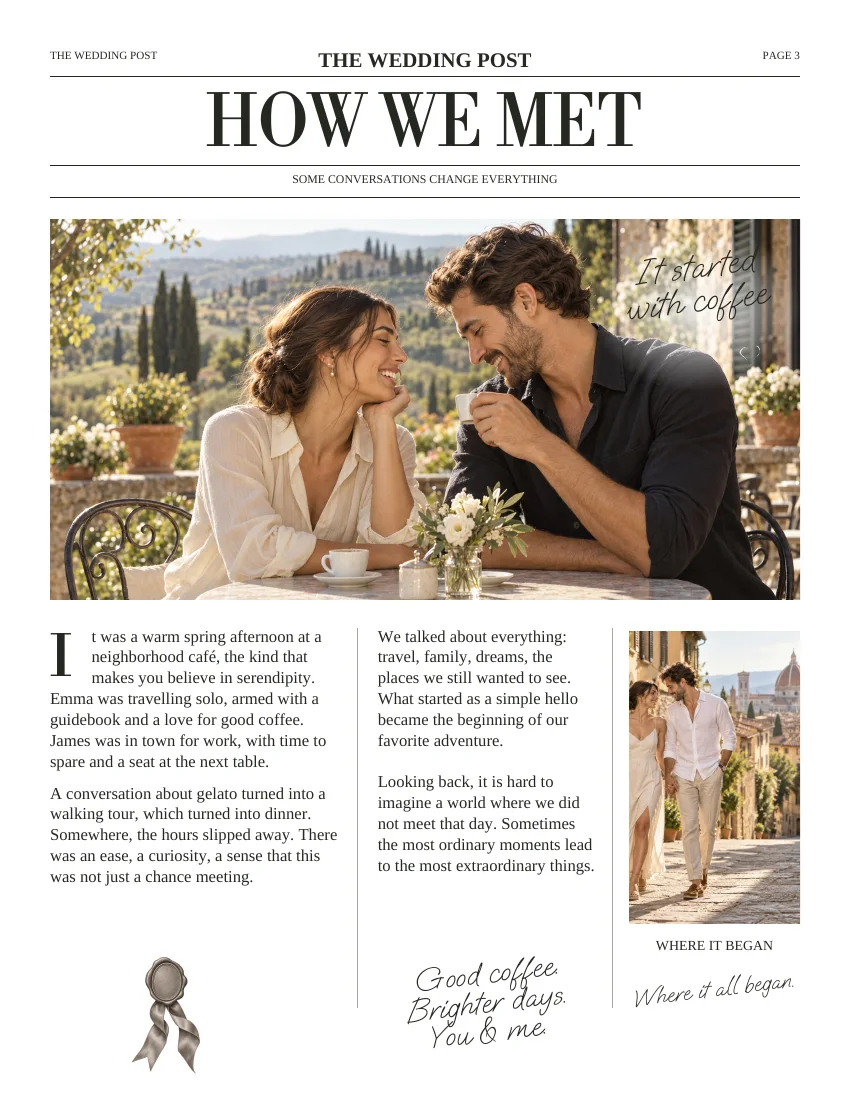
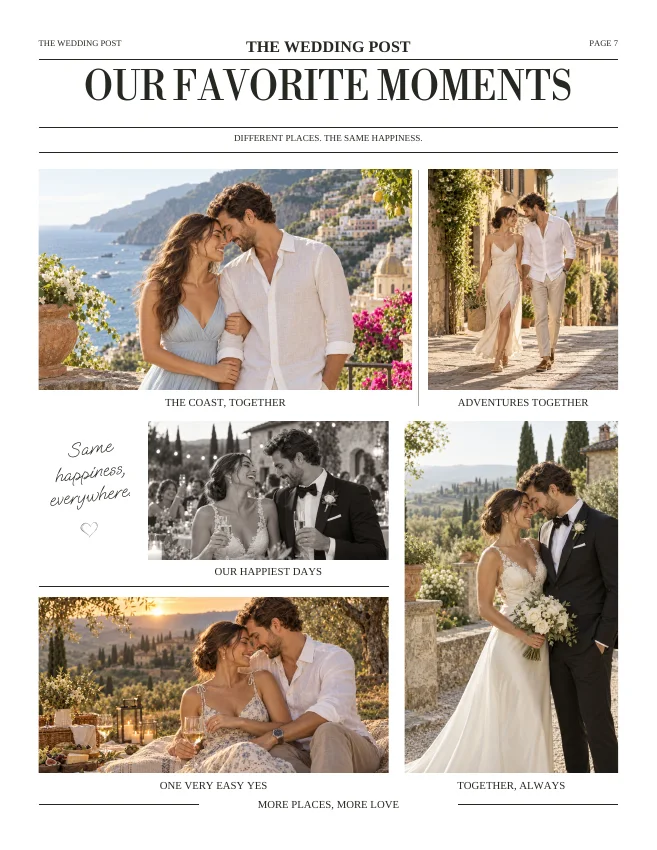
The cover establishes the names, date and tone. Inside, the story page combines a narrative with supporting pictures instead of asking one long paragraph to carry the whole relationship. The day-plan page has a different job: it lets someone find a time quickly. The closing page slows the pace again with a photograph and a note of thanks.
Notice that the pages are not interchangeable. A full-page sunset photograph might make a beautiful ending but a poor background for a detailed shuttle timetable. When you adapt a sample, preserve the purpose of each page even as you replace the photographs and words.
What the longer example adds
An eight-page issue can separate the story from the how-we-met feature and give guests and photographs more space. The benefit is a calmer reading pace, not simply twice as much text. Compare the sample's people page with the story page: short introductions need a different rhythm from a personal narrative.
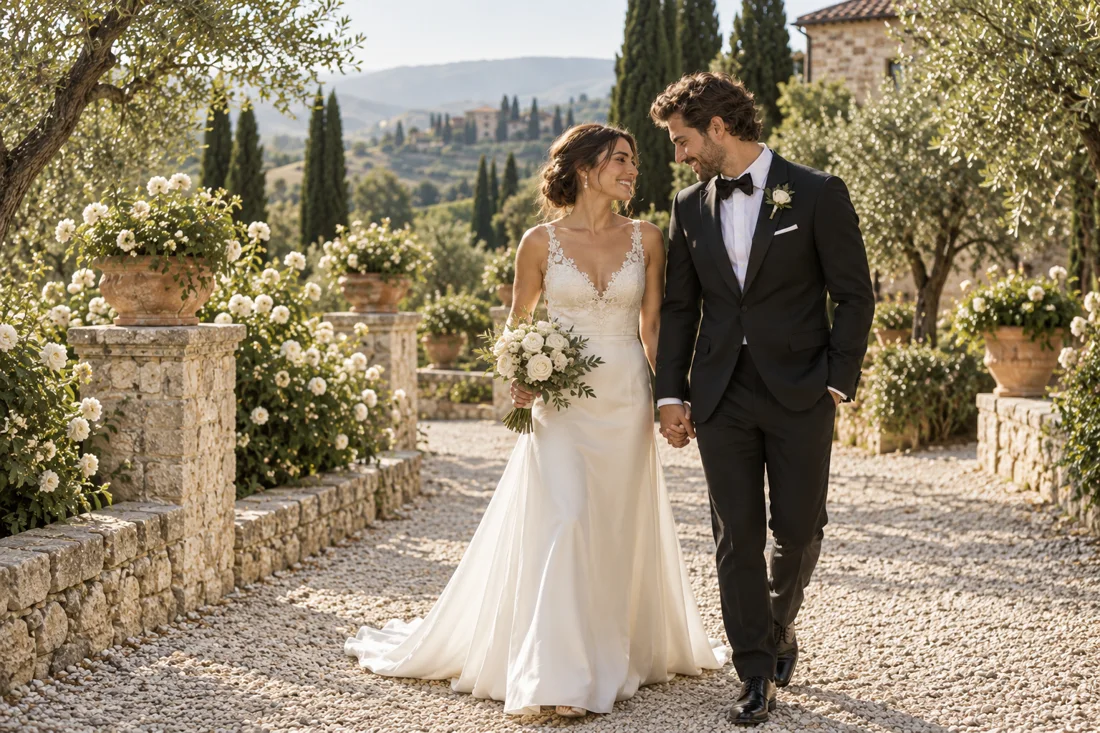
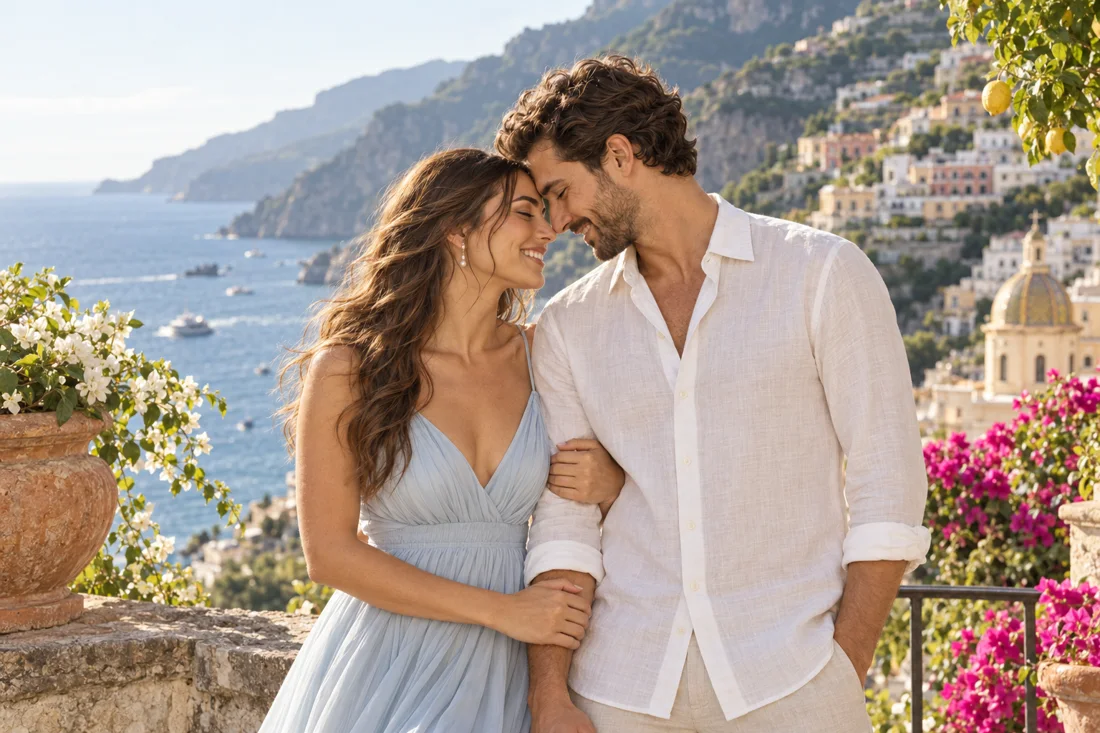
The examples here are fictional demonstration designs, including AI-generated sample photographs. They show the layout, not a real customer wedding. Use your own photographs and verified wedding details in the editor. Open the PDF to judge the entire page, then print a proof to assess the smallest type and the final physical scale.
ON THE PAGE
See how it comes together.
Actual sample pages from Editorial Classic. Open a page to explore the PDF. Replace the fictional details and sample photographs with your own.
KEEP IT SIMPLE
Your next steps
- Open the full PDF
- Check the densest text page
- List the photographs needed
- Compare with your own story length
GOOD TO KNOW
A few things you might be wondering.
Are these real customer weddings?
No. The examples use fictional couples and prepared demonstration assets. They show the design and are not customer testimonials.
Can I use the example as my personal newspaper?
Start a project in the workspace to replace the sample content. A public PDF preview is not your editable personal project.