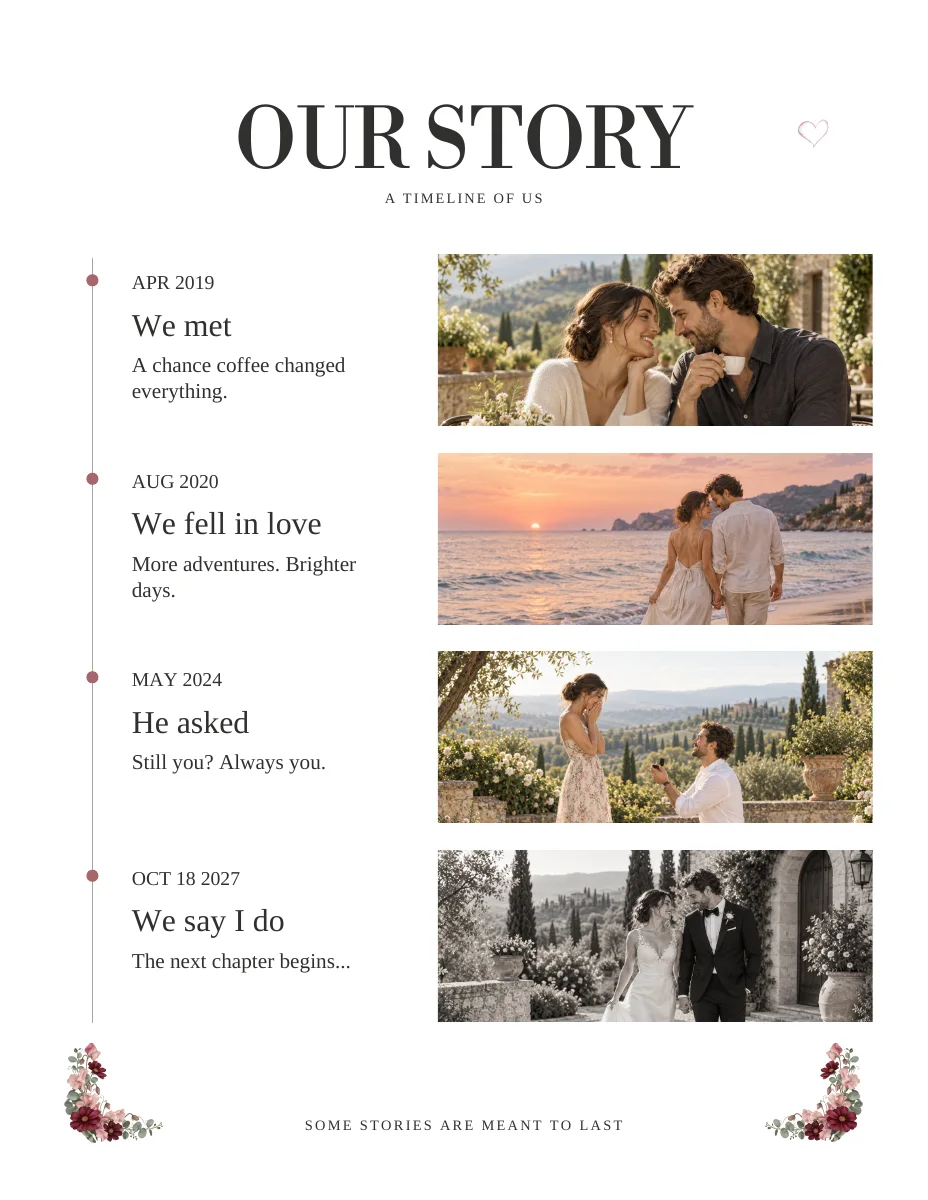
The essentials: who, when and where
Include both names, the wedding date, the venue and the guest-facing schedule. Add an address where guests need to navigate. For more than one location, make each transition clear. A brief welcome helps the paper feel personal from the first page.
The personal story
Choose from how you met, a proposal anecdote, a relationship timeline or a note about the place you chose. You do not need all four. A few specific moments will tell readers more than a long biography. Add a photograph that belongs to the story rather than filling a box with an unrelated image.
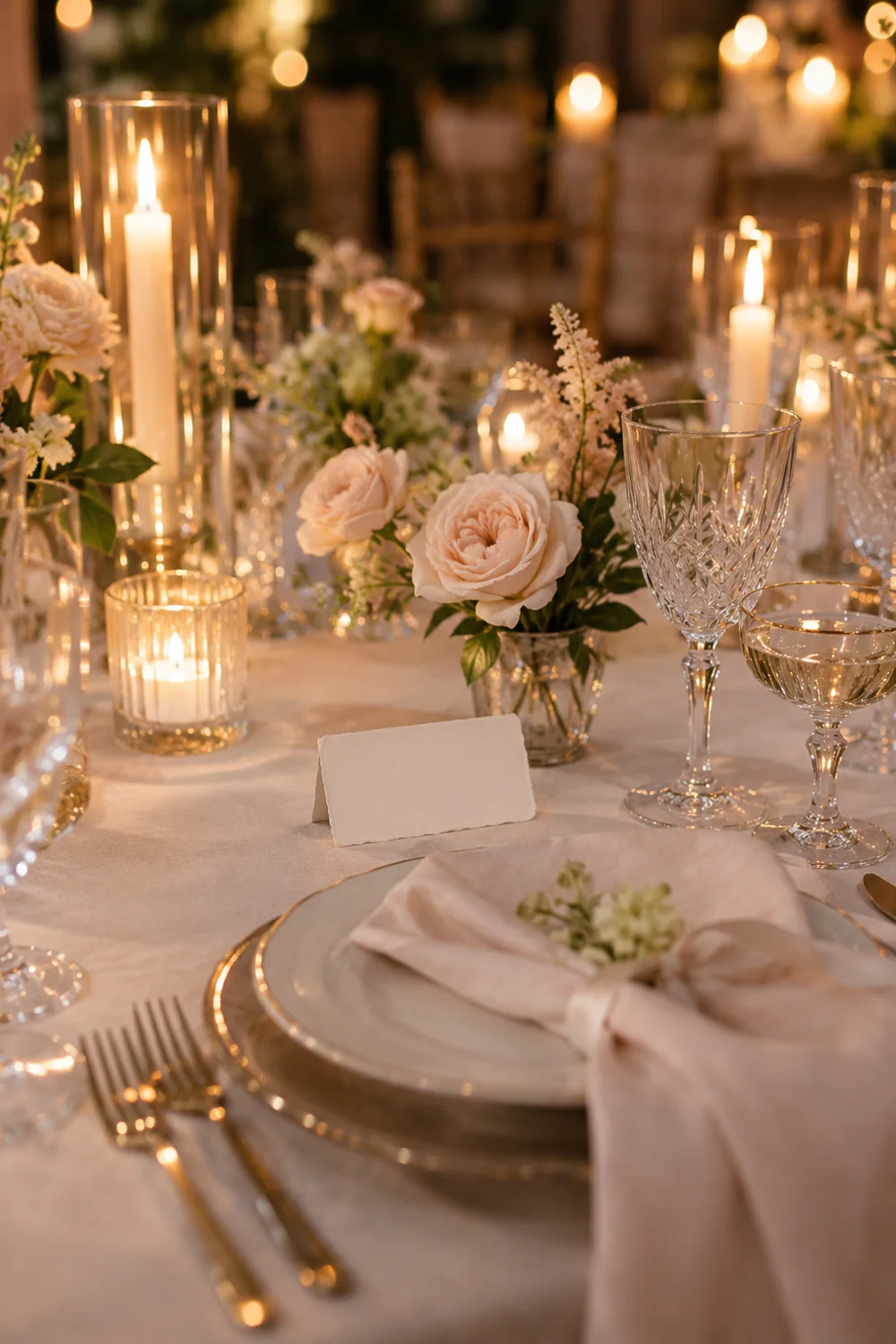
The people and the party
Introduce the wedding party, acknowledge family and explain any meaningful traditions. A menu preview, music note or short game can create conversation. Ask before printing personal stories about other people and check the names beneath every portrait.
A four-page content plan
Use page one as a cover and welcome. Give page two to your story and a small timeline. Put the guest schedule and venue notes on page three. Close with a photograph and thank-you on page four. If a section starts forcing tiny text, shorten it or move it to a separate piece.
Your content brief
| Section | Question to answer | What to gather |
|---|---|---|
| Cover | What are we celebrating? | Names, date, lead photograph |
| Our story | What made this relationship yours? | Two or three real moments |
| The day | Where should guests be next? | Confirmed time and location |
| Our people | How do these people connect? | Preferred names and portraits |
| With love | What would you like guests to remember? | A short, personal message |
An eight-page content plan
Use the extra space for a dedicated how-we-met feature, wedding-party introductions, the table and favorite moments. Keep each spread distinct. You can leave some optional ideas out; extra pages are valuable when they improve pacing and readability.
25 details you can choose from
Names; date; venue; welcome note; ceremony time; reception location; transport; dress code; local time zone; how you met; proposal; relationship timeline; couple facts; wedding-party bios; family thanks; traditions; menu; signature drinks; playlist note; couple quiz; crossword; photo prompt; local recommendations; website link; closing thank-you. Pick the ones that solve a real need or reveal something meaningful.
What to leave out of the printed version
Keep private phone numbers, access codes and personal addresses out of copies that may be photographed or shared publicly. A wedding newspaper does not need to reproduce the planner's entire schedule. Vendor arrival times, payment notes and family situations can stay in a separate document. The guest-facing paper should make the day easier, not reveal the machinery behind it.
Cut repeated facts too. You might need the date on the cover and the day-plan page, but a full venue address under every photograph consumes space without helping anyone. Reuse shared facts where they guide a decision; let the other pages tell the story.
Edit for the reader, not for the empty space
Build the core version first. If a page feels sparse, try a larger photograph, a more generous headline or a short caption before adding another paragraph. If it feels crowded, remove the least useful section before shrinking the type. A guest should be able to read a schedule while holding the newspaper, without needing a screen's zoom control. Print a draft at the intended size and mark anything you instinctively lean closer to read.
ON THE PAGE
See how it comes together.
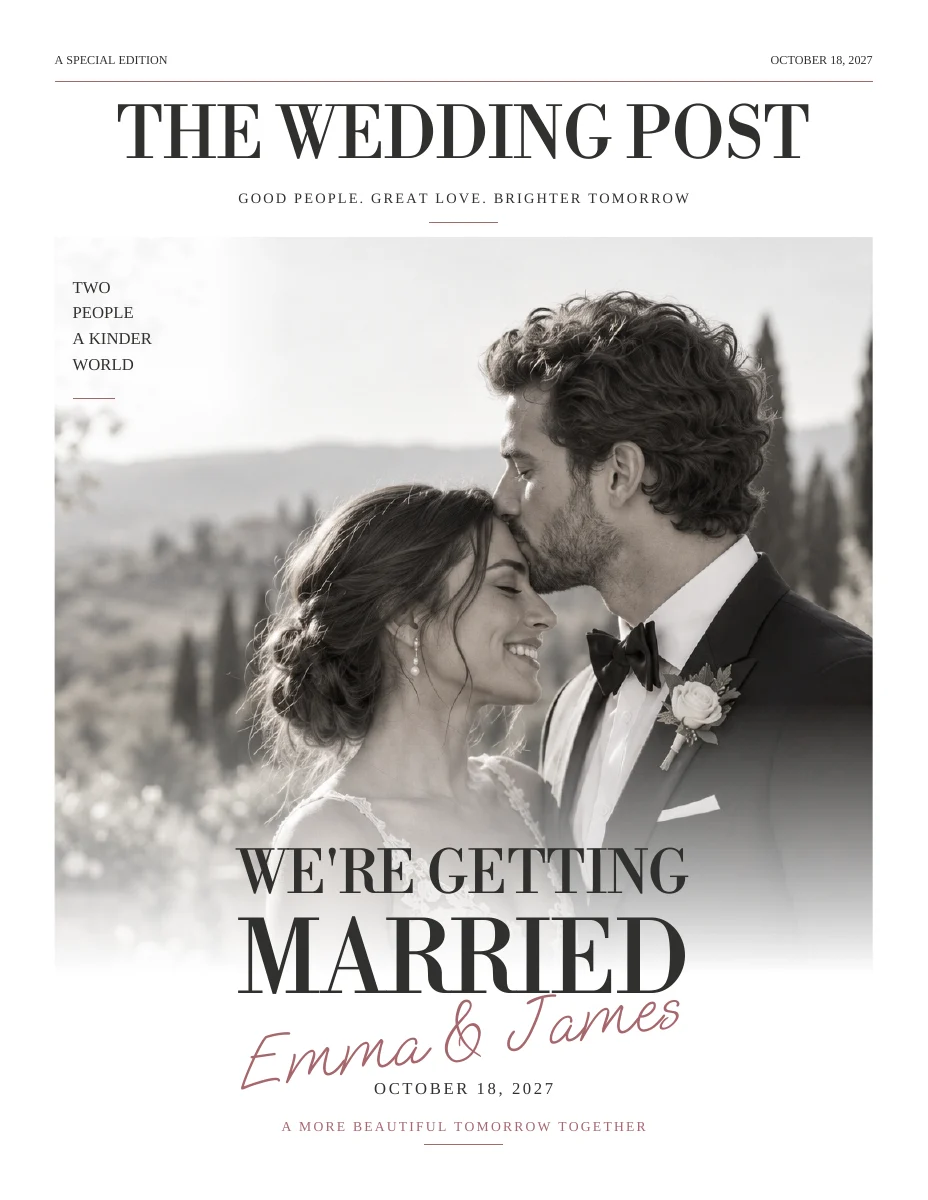
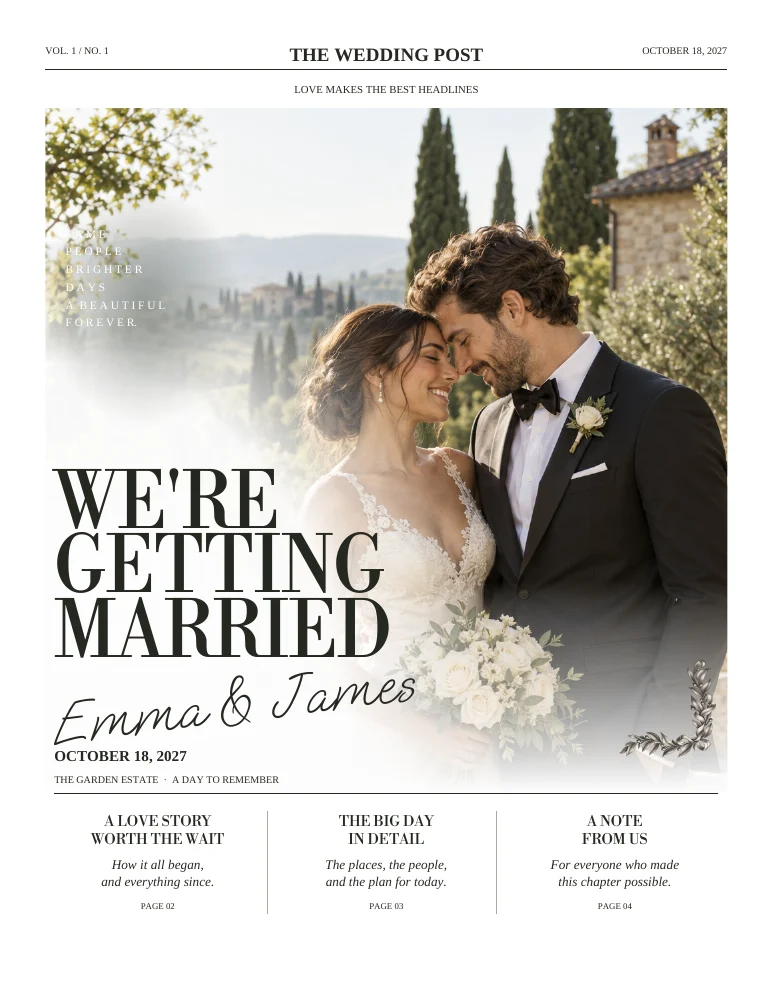
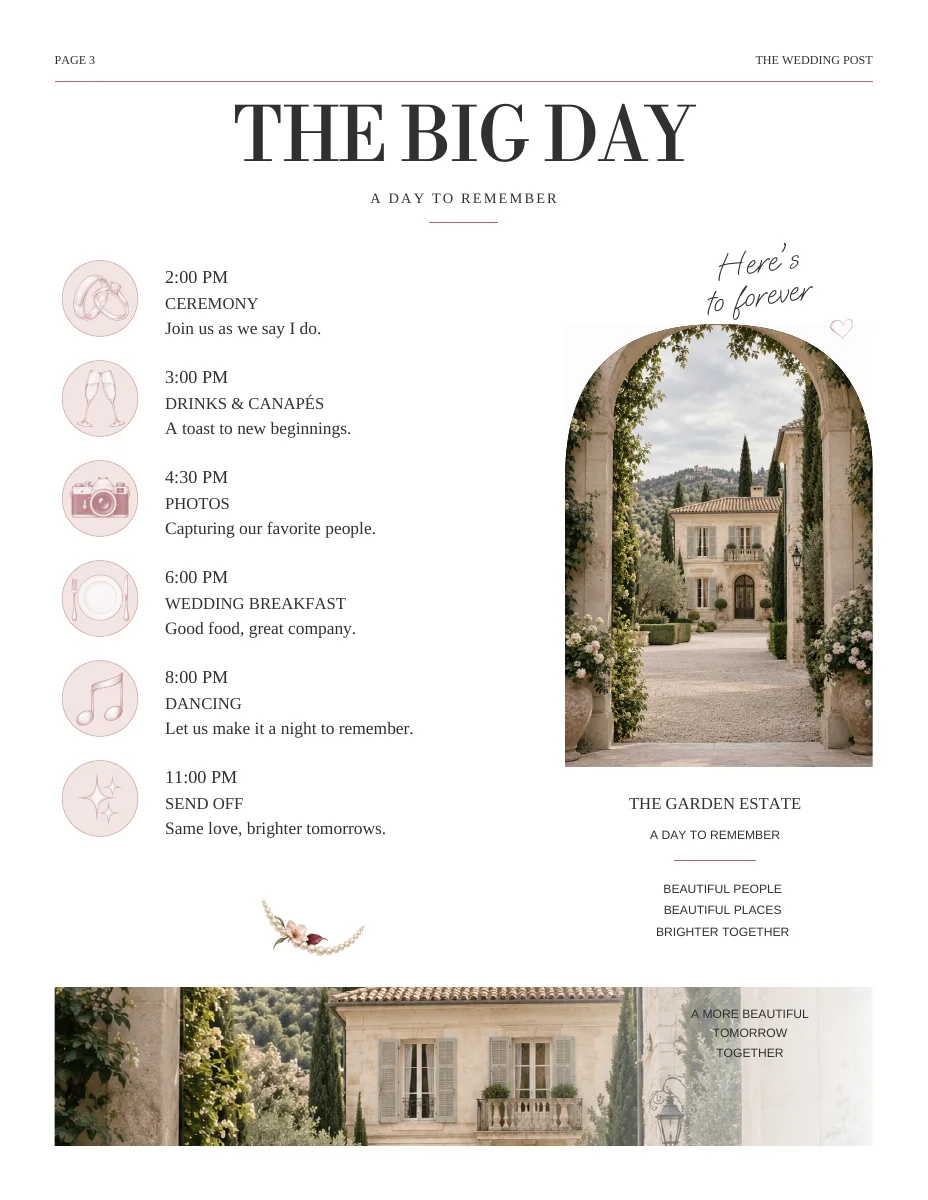
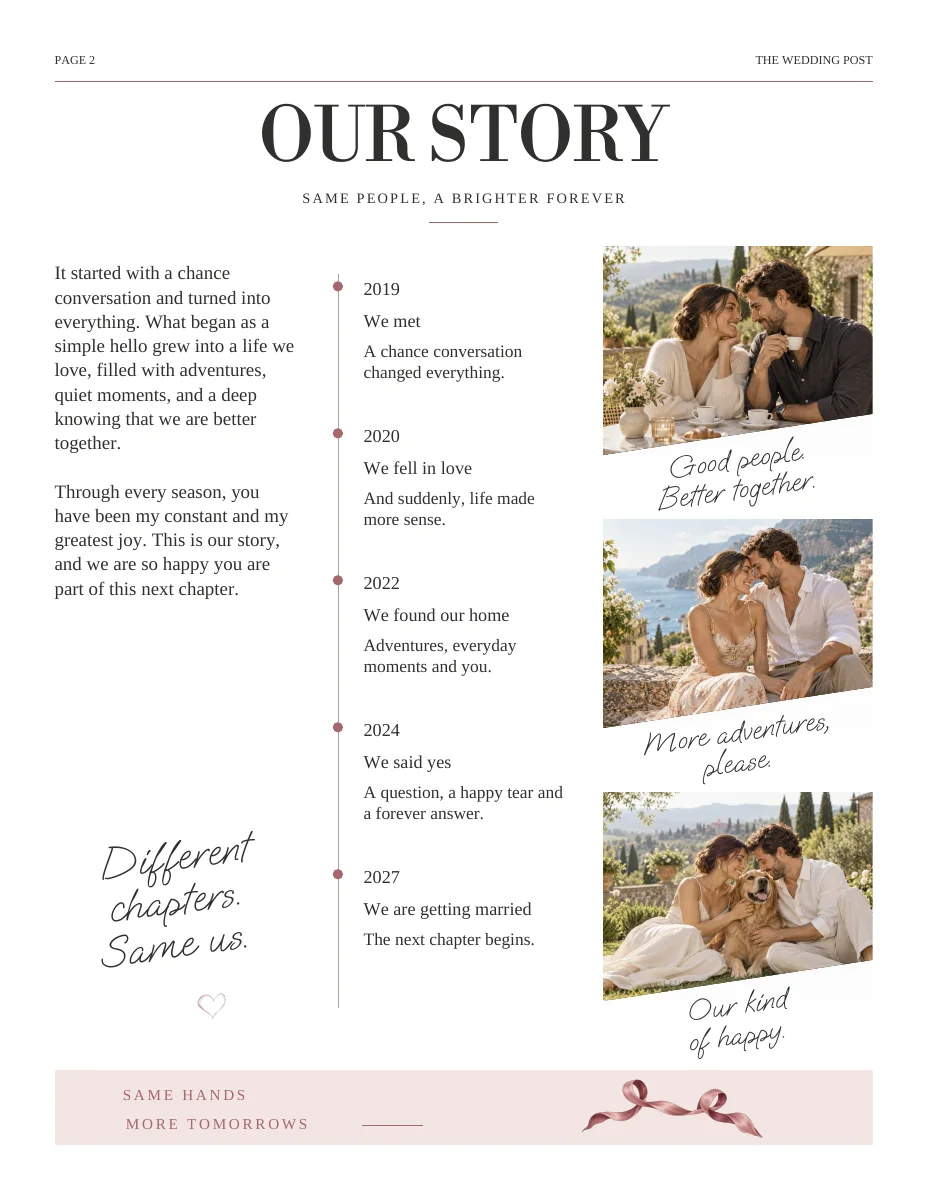
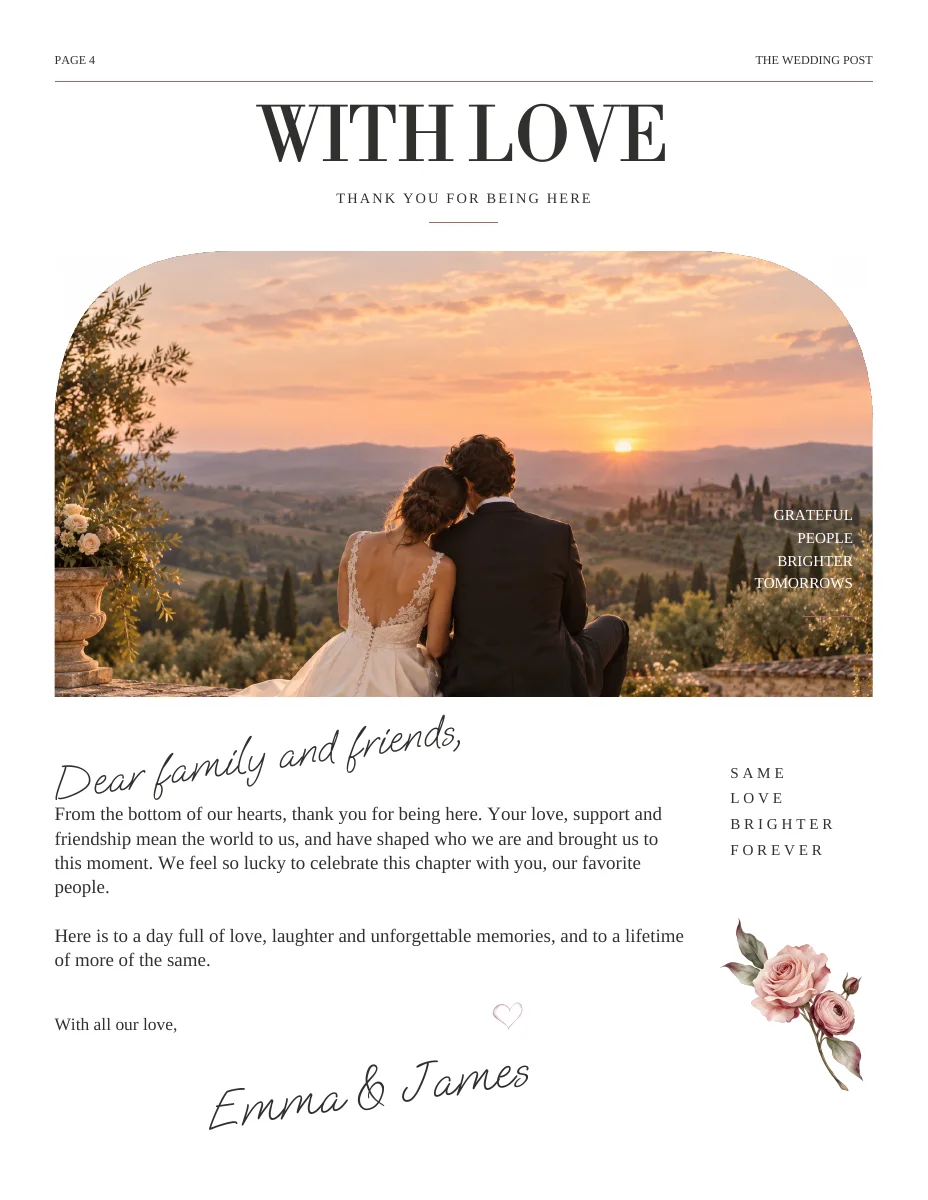
Actual sample pages from Modern Romance. Open a page to explore the PDF. Replace the fictional details and sample photographs with your own.
KEEP IT SIMPLE
Your next steps
- Essential logistics are easy to find
- Each optional section has a purpose
- Stories and portraits have context
- Nothing is squeezed into unreadable type
GOOD TO KNOW
A few things you might be wondering.
Should I include the full dinner menu?
Include it if the space is useful. A separate menu card may be easier to read at the table and avoids repeating the same content.
What should I leave out?
Private contact details, unconfirmed plans, embarrassing anecdotes and long vendor instructions usually do not belong in a guest newspaper.